

Book A Call With ADHD Coach Kat Today
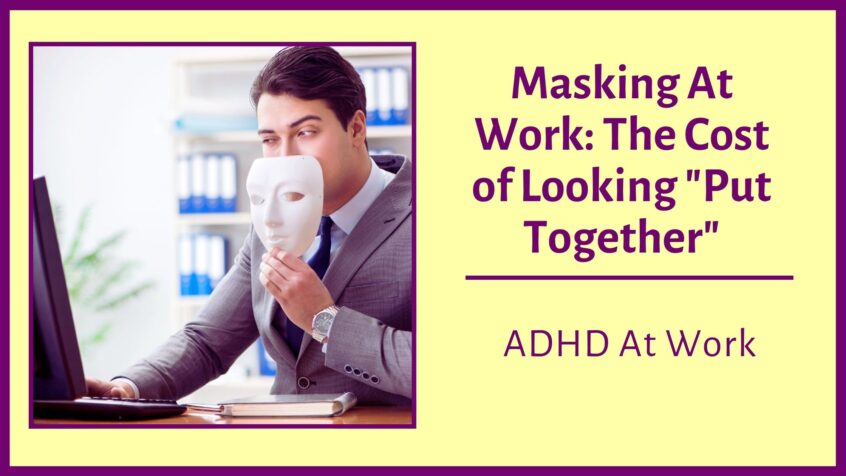
Masking At Work:
The Cost of Looking “Put Together”
ADHD At Work
Most workplaces reward the appearance of effortlessness. Things like an organized work area, a a clean in box, quick responses – a person who’s “on top of things.”
For many ADHD and neurodivergent humans, that “put together” appearance often comes from something else.
Masking.
Masking is that invisible work of having to adjust your behavior (or even your face) to match what your neurotypical workplace expects. It’s the way we switch our natural rhythms into “acceptable” ones.
And while it can sometimes help you navigate a system not designed for you – it comes with a cost.
A pretty big one.
Let’s chat about it.

Masking At Work – What It Might Look Like
Masking isn’t always dramatic, or even noticeable. Most times it looks like competence. But below the surface there’s much more happening.
When it comes to work, masking might look like:
- Over-preparing for meetings
- Rewriting emails to be “more professional”
- Second guessing or staying quiet about your ideas
- Rejection Sensitivity
- Working twice as hard
- Hiding struggles or laughing them off
It can also look like endless monitoring of yourself:
- “Am I too loud?”
- “Did I interrupt?”
- “Did I make sense?”
- “Did I make enough or too much eye contact?
Your boss and co-workers might see “responsible” or “professional” but internally it can feel like running too many tabs in your brain at once.
Your job.
Your performance.
The version of yourself you’re trying to maintain.
The Cost of Masking
Masking often develops for good reasons. Survival type reasons.
Many of us learned early that being ourselves leads to criticism, correction, and misunderstandings. So we learned to adapt, “appear normal.”
But oh what it costs us.
Trying to maintain that version of you all day, every day, is exhausting. And it can lead to
- BurnoutChronic
- Fatigue
- Anxiety
- Perfectionism
- Overworking
- Feeling Disconnected
- Imposter Syndrome
- Cycling through jobs
The end of the day comes and you may completely collapse – that’s your brain and nervous system breathing….finally.
The problem isn’t that you are weak or incapable. The problem is that it takes an incredible amount of energy to be “put together” all the time.
Even moreso whenyour brain is also managing executive function challenges, overstimulation, emotional dysregulation and more.
That’s a LOT for any nervous system. It’s no wonder that you are exhausted.

How Can We Reduce The Necessity of Masking At Work
Sometimes we have to mask for safety reasons, or to avoid losing a job. So the goal isn’t necessarily to stop masking overnight.
Most jobs still have neurotypical expectations and masking can be a short term survival strategy.
So – how can we reduce the pressure, thereby reducing the need to mask as much?
One shift is allowing more honest systems instead of perfect appearances. For example:
- Using visible reminders instead of pretending you’ll remember
- Asking for written instructions instead of verbal
- Asking for an email reminder of things you agreed to do
- Using a notetaker/taking notes
- Scheduling Focus Time
- Body Doubling
And another shift that is helpful is to change the story we tell ourselves….Needing reminders or accommodations isn’t a flaw and doesn’t mean we are broken.
It’s good self awareness and that’s one of the most powerful tools you can have in your tool box.
The goal isn’t to become the most “together” person in the room – it’s to build ways of working that actually support your brain and allow you to shine.

You Aren’t Alone
If you have ever ended the work day feeling totally drained from holding it together, you are not alone.
A LOT of us ADHD and other neurodivergent humans are doing it every single day. And many workplaces still haven’t figured out how different brains function.
But…conversations about neurodiversity at work are growing. People are learning to advocate. Leaders are beginning to figure it out. And slowly workplaces are becoming more flexible.
In the meantime?
You get credit for the effort you have been carrying.
Even if no one else sees it.
Reflection Question: Where in your work life do you feel the strongest pressure to look “put together?”

 Don’t Delay Joy
Kat Sweeney, MCLC, ACC