
Book A Call With ADHD Coach Kat Today
School Struggles Are Not A Character Flaw
School Stuff Without The Spiral
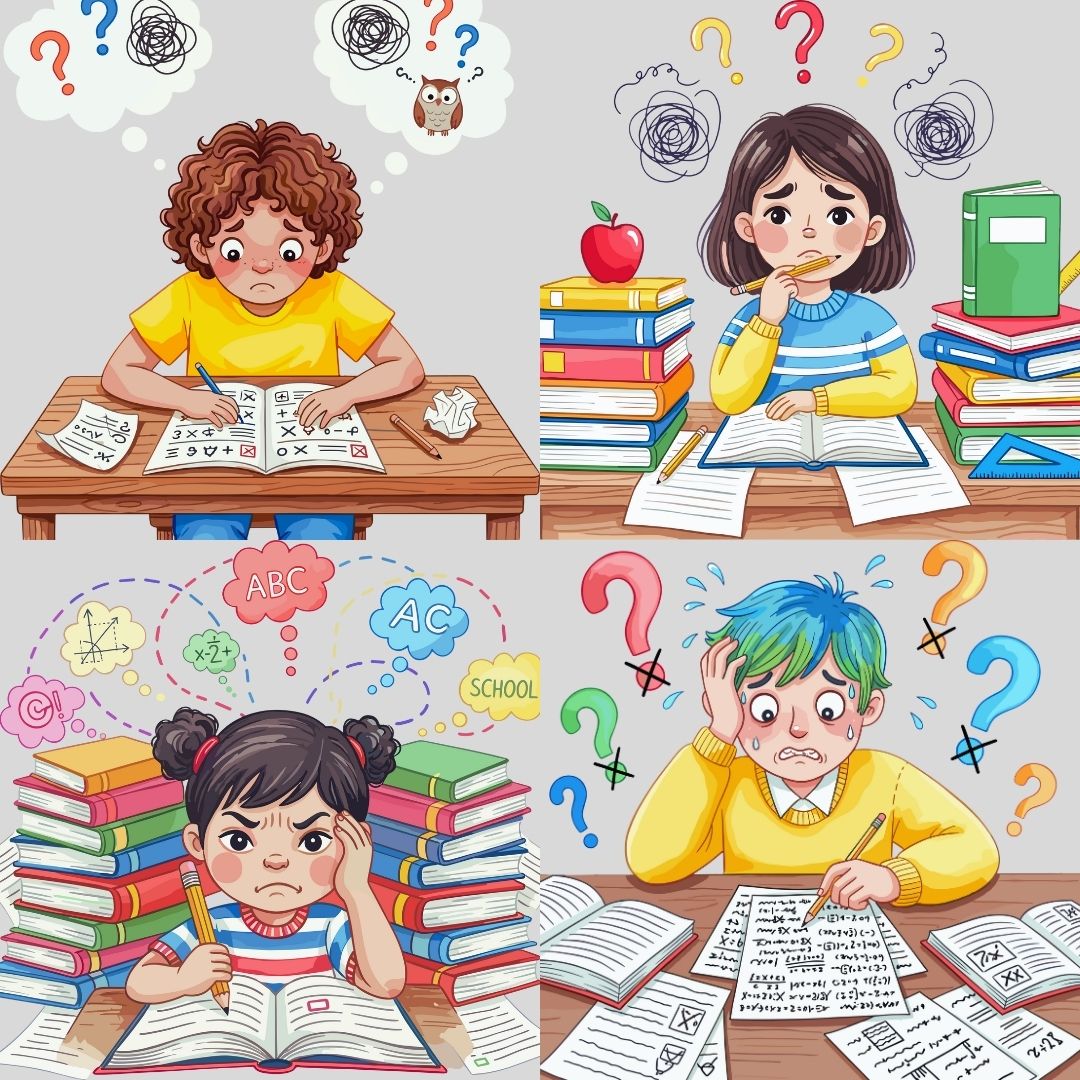
School struggles are often treated as moral failures, behavior problems, or bad parenting instead of nervous-system or skill-based struggles.
Our kids tend to internalize feedback as criticism of who they are, so phrases like “lazy”, “unmotivated,” “not trying”, etc land hard.
For our ADHD kids, they feel that extra hard.
For me, years and years of being told I was lazy led me to decide to lean way into that label.
But school struggles are neither a parenting failure nore a child failure – it’s a misinterpretation problem.
Let’s chat about how we change the lens, not lower expectations.

School Struggles Get Misread As Character Issues – Why?
Traditional schools are really good at rewarding things that are easy to see.
- Sitting Still.
- Following directions promptly, turning in work timely
- Staying calm in loud rooms.
When one of our kids struggle with these things, the story often becomes, “They just need to try harder”, and over time those stories quietly turn into labels like lazy, unmotivating, or defiant.
But – there is a piece that often gets missed. Many types of effort don’t “look like” effort from the outside. For our kids, effort is often happening internally.
It takes way more energy for our neurodivergent kids to do things like tune out noise and distraction, regulate emotions, remember the directions, and be still all at the same time. That is real effort, even if it doesn’t show up as neat papers and perfect homework.
Inconsistency isn’t a character flaw either. As adults, we know that sometimes we can do a thing, and other times it’s just too much. It’s the same for kids – being able to do something sometimes doesn’t mean a kid can do it on demand, especially in environments that tax executive function all day long. But often if a child can do it once, if they later cannot, it’s seen as being defiant and oppositional.
When adults mistake capacity and energy challenges for attitude problems, kids start carrying stories about themselves that were never true in the first place.
I know personally that this can and often does have life-long consequences.
For example, when I was deemed “lazy” – even though I was trying – it was easy for me to give up and decide to lean all the way into laziness. They already thought it anyway. It held me back in many ways because I learned to believe it.
What’s Going On Under The Struggle
There is so much going on under the surface that never makes it to a progress note or report card.
Many of our kids spend the school day masking – holding it together socially, managing sensory overload, and trying to mimic the behaviors of their neurotypical peers. That’s invisible work and it takes a ginourmous amount of energy.
By the time the child gets home from school, there’s nothing left in the tank. And – they don’t usually understand what is going on or why.
This is why so many parents see meltdowns, shutdowns, tantrums, or complete avoidance after school. SO many parents want to know, “Why can my kid hold it together in school but melts down or is defiant at home?”
Your child didn’t suddenly become difficult. They don’t hate their parents and you aren’t bad caretakers. It’s just that their nervous system is finally off duty.
If you get nothing else from this blog, hear this, “Your child is not giving you a hard time. They are having a hard time.”
When kids experience repeated struggle without enough support, shame starts to creep in. Kids notice when they aren’t doing what their peers are, or when they are doing it differently. They start to believe that they are bad at school, or worse – that something is wrong with them.
Shame is really heavy – it makes it harder to try, harder to ask for help, and harder to bounce back after setbacks. What looks to us like avoidance, defiance, laziness, lack of motivation, etc – is often a child protecting themselves from more failure.
That’s a stress response, not a character flaw.

Shifting From Fixing To Supporting
This is the point where things can gently change.
Instaed of asking, “Why won’t they do this?” try asking, “What is making this a struggle right now?”
That tiny shift moves out of blame and into curiosity. Supporting a child with school struggles isn’t about lowering expectations or giving up on growth.
It means focusing first on regulation over correction and collaboration before control. It’s recognizing that skills like organization, time management, and emotional regulation don’t develop evently – or at the same rate as their neurotypical peers.
Often these things need to be taught and supported explicity.
Support might look like breaking things down, adjusting the environment, or talking through emotions.
It might be messy. It might not be linear and that’s okay.
The goal isn’t to eliminate struggle entirely.
The goal is to reduce the shame around it and protect your child’s sense of welf while they are learning how their brain works.

A New Story To Tell Your Child (and Yourself, too!)
School struggles aren’t a character flaw, they are information. They tell us where support is lacking, where nervous systems are overwhelmed, or where expectations don’t match capacity (yet.)
We know our kids don’t need to be fixed.
They need to feel safe, understood, and supported while they build skills in a world that wasn’t designed with their brains in mind.
Oh and parents? You are allowed to let go of shame too.
This is tough work, and you are doing amazing.
The story you tell matters. “You are struggling” is very, very different from, “You are the problem.”
Hold on to that, especially on days that school feels heavy.

 Don’t Delay Joy
Kat Sweeney, MCLC, ACC