Book A Call With ADHD Coach Kat Today
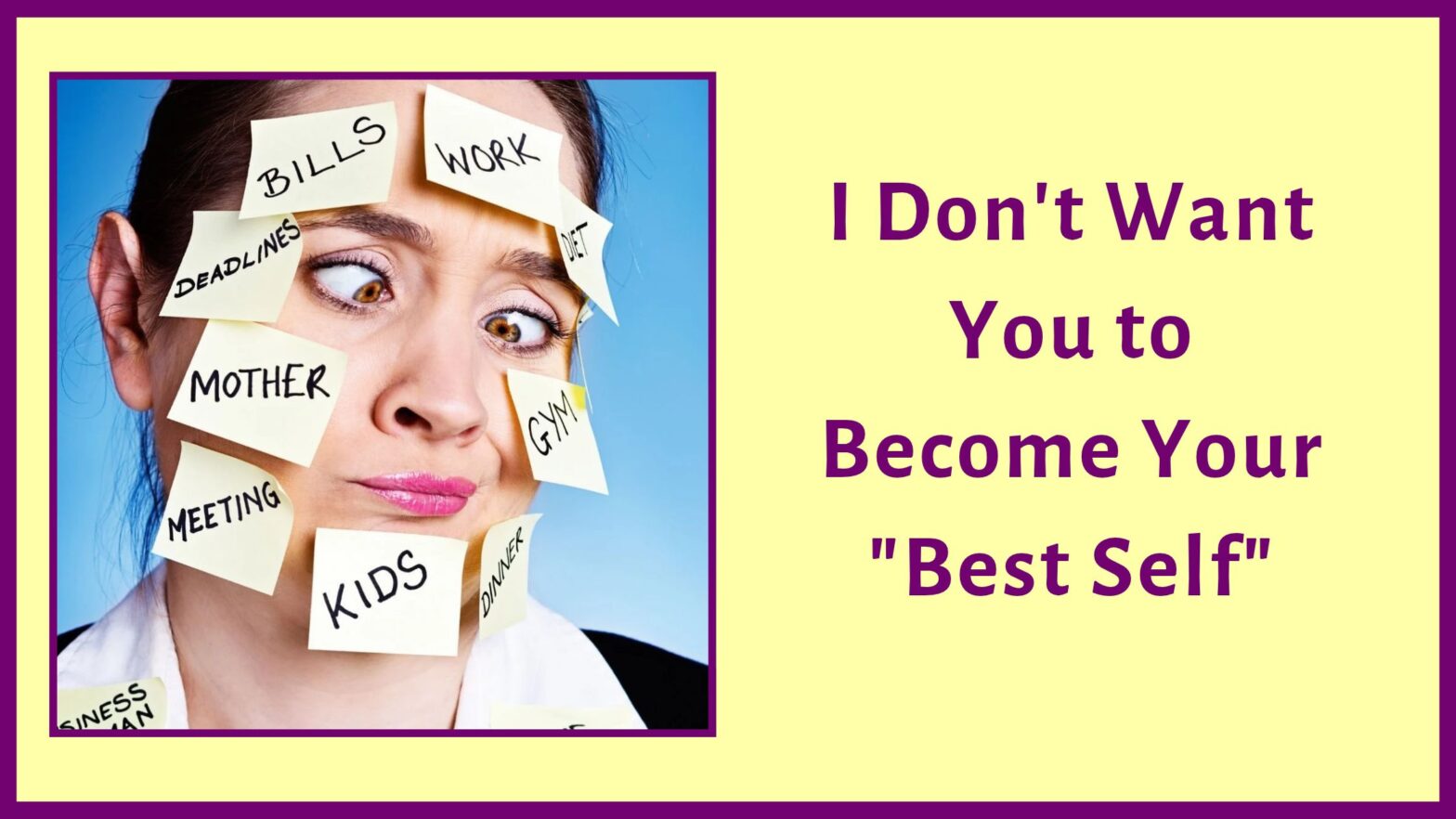
I Don’t Want You To Become Your “Best Self”
Real Chat, Real Confession. I am an ADHD Coach, and I still don’t want to help you become your “best self.”
I know that’s probably not what you would expect to hear from a human whose job involves helping people make changes in their lives.
But let’s chat about that.
We live in a culture of self-improvement. I can only speak as a human who lives in the US, where we are positively flooded with self-improvement messages.
There are books, advertisement, podcasts, apps, and something like 72 million people on social media telling us what to do (or what to buy) to become better versions of ourselves.
“Build better habits. Develop better routines. Become more organized. Learn to be more productive. Unlock your hidden potential!”
What we hear somewhere in all that advice is a quiet voice that says, “Who you are right now isn’t quite good enough.”
For neurodivergent folks, that message can hit especially hard.

When Self-Improvement Becomes Another Way To Feel Like You’re “Not Enough.”
ADHDers and many neurodivergent adults have spent decades being told what they need to do differently.
Try harder. Sit still. Pay attention. Stop procrastinating. Get your act together. Set an alarm.
So..we try.
We buy the planners and download the apps. We create elaborate systems that we are convinsce will change our lives. (I know that’s not just me!)
Sometimes those things do help.
But sometimes they work for about eleven days before joining the sad mountain of things we thought would help us adult better.
And then we blame ourselves.
We hear old messages and decide we didn’t try hard enough, aren’t smart enough, weren’t disciplined enough, or – if we are being kind to ourselves, a conviction that we just picked the wrong thing to try.
What I’ve learned is that there is a very big difference between wanting to imporve something in your life and believing you need to become a “better you” to be worthy of a good life.
One comes from curiosity and a desire to make things work better.
The other comes from guilt and shame.
And those are pretty sh*&ty foundation for sustainable change.

You Aren’t Broken and You Don’t Need To Be Fixed.
When someone comes to me for ADHD Coaching, my job is not to look at them and make a list of all the things that need “fixing.”
I’m far more interested in understanding what is happening in their world.
What works for them? What’s not working? Where are the friction points? What have they tried before? Why is this goal important?
And ultimately – how can we work together to help them gain understanding about their own brain and begin to learn to trust themselves.
Because so many of us have spent so much time trying to meet other people’s expectations that we’ve lost confidence in our own ability to figure things out.
We know what we’re supposed to do, or what we should do. We’ve probably been told a million times.
What we often haven’t had is the opportunity to explore what actually does work.
Coaching, at least the way I approach it, isn’t about turning someone into a more organized, productive, socially acceptable version of themselves. (Though those things happen often)
It’s about helping them build a life that works with their brain instead of constantly fighting against it.
Sometimes the biggest shift isn’t learning the new strategy – it’s realizing that struggling with something doesn’t always mean you are failing as a person.
Growth Doesn’t Have To Mean Changing Who You Are
I’m not suggesting that we all just throw our hands up, declare that this is just how we are, and never work on anything ever again.
Of course we can grow.
We can learn new skills, change habits, take responsibility for our actions, and work towards things that matter to us.
We can work on setting future Us up for success.
Self-acceptance and personal growth aren’t opposites.
But I think we can rethink what growth is supposed to look like.
One of the things I talk about in coaching is that when we encounter a friction point, we generally have two options: build a skill or create an accommodation…or some combination of both.
Here’s an example.
You keep forgetting appointments.
You could work on building a habit of checking your calendar (skill building), or ask someone to help you keep track of important dates (accommodating), or do both – or put a giant whiteboard somewhere you’ll actually see it – those can be both!
The point isn’t to prove that you can remember everything without help. The point is to stop missing appointments.
We don’t get extra credit for doing things the hard way or doing things in ways that cost more energy than it needs to.
Sometimes we work toward developing a new ability, sometimes it means recognizing that you don’t need to develop that ability at all because there’s another way to get your needs met.
Neither one makes you a better or worse human being.
What If the Goal Is A Life That Actually Fits You?
Let’s consider this.
What if, instead of constantly asking ourselves how we can become better adults, we started asking how can we make our lives work for the people we already are?
What if success looked more like having enough support, enough breathing room, and enough trust in ourselves to navigate life without constantly feeling like we’re falling short?
Everything isn’t going to suddenly become easy.
ADHD, AuDHD and other neurodivergent brains come with real challenges, and no amount of self-love and self-acceptance magically makes executive functioning difficulties disappear.
You are allowed to change your mind, learn things about yourself, struggle with things you thought you’d figured out, and need different kinds of support at different times.
You are allowed to be a work in progress without making your entire existence a project.
And you are allowed…encouraged….to enjoy life along the way.

So no, I’m not the coach that wants to help you become “your best self.”
I want you to understand your brain, recognize your strengths without pretending your challenges doen’t exist, and to learn skills that make your life easier.
I want you to feel comfortable asking for accommodations when you need them.
I want you to trust yourself enough to figure out what works for you, even when it looks nothing like what works for someone else – or even what worked two months ago.
Before you add another self-improvement goal to yourself, here are a few questions to consider:
- Whose definition of better am I trying to live up to?
- How much am I “shoulding” on myself?
- Am I working toward a goal for myself or because someone else wants me to?
- Is this something I need to build a skill to fix?
- Or is there an accommodation that will work?
If we partner together, you can expect to keep learning, growing, experimenting and changing without making your worth dependent on how much progress you’ve made.
I don’t want you to “become your best self.”
I want you to build a life where your actual self right now today has room to thrive.
And you don’t have to do anything at all to deserve that.
 Don’t Delay Joy
Kat Sweeney, MCLC, ACC